
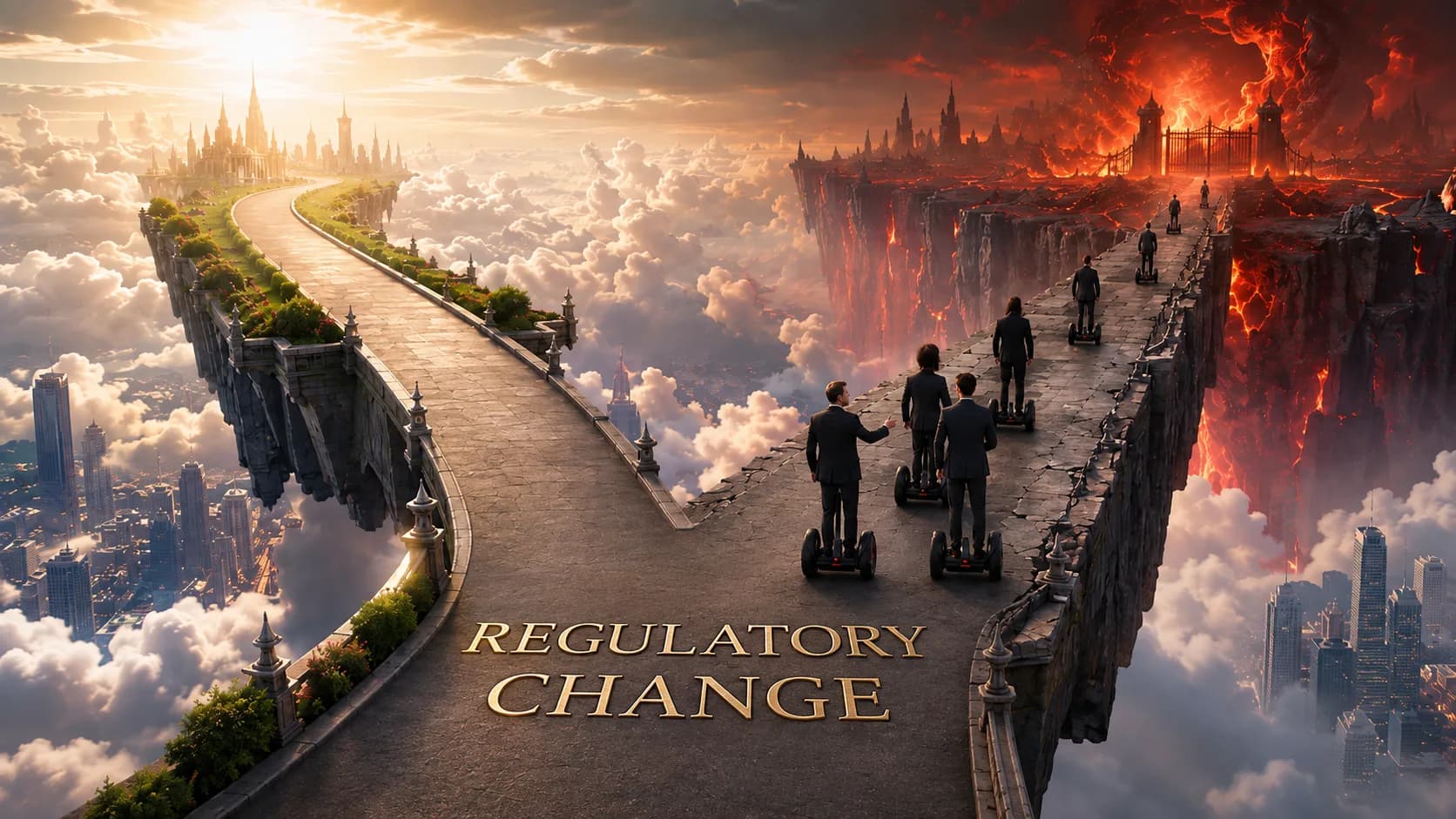
Everyone finds out when a regulation changes. That part works. You have alerts, a regulatory intelligence feed, a compliance newsletter, a colleague who forwards the update with "FYI" and nothing else. The change lands in your inbox the week it happens. Knowing is not the problem.
Acting on it, all the way down to the people who need to behave differently, is where it quietly falls apart.
Consider the actual chain of events after a rule changes. Someone has to read the change and understand what it means in practice. Someone has to decide which of your policies it touches. Someone has to update those policies. Someone has to figure out which training references the old requirement. Someone has to rebuild that training. Someone has to identify which employees were trained on the now-outdated version. And someone has to get those specific people retrained and confirm they absorbed the change.
Each of those steps is a handoff. Each handoff is a place the change can stall. And the last two steps, the ones that actually close the loop by reaching the right people, are the ones most likely to never happen at all.
Knowing the rule moved is not the same as acting on it
This is the gap the alert doesn't cover. Regulatory intelligence tools are good at the front of the chain: they tell you, accurately and quickly, that the rule moved. Then they stop, because their job ends at notification. What happens next is manual, and manual work in a busy compliance function is work that competes with everything else on fire that week.
So the change gets logged. The policy gets updated, eventually. And the training, the thing that actually changes what people do, sits at the back of the queue. Months later, new hires are still being onboarded on the old version, because the module was never rebuilt. Existing staff were never flagged for retraining, because no one mapped the change to the people it affected. The organization "knows" the rule changed, in the sense that the knowledge exists somewhere. It just never reached the point of changing behavior.
The uncomfortable version of this: you can be fully aware a regulation changed and still have a workforce operating on the old one, and not know that you do.
The blind spot is per-person and no one is watching it
Here's what makes this genuinely hard to catch. The gap isn't at the organizational level, where you'd notice it. It's at the individual level, where you wouldn't.
Say a requirement changed in March. Your policy was updated in May. But the analyst hired in February was trained on the old procedure, and the training was never refreshed, so they're still applying the pre-March logic. The employee who transferred in from another team never got the update at all. Three of your people are current and two are not, and nothing in your system distinguishes them, because completion records show everyone was "trained," just not on the same version.
That's the exposure. Not that you missed the change. That you can't see, person by person, who is current on the rule as it stands today and who is operating on a version that no longer applies. When an examiner asks how you ensure your people are trained on current requirements, "we sent an alert" and "we updated the policy" are not answers about people. They're answers about documents.
Closing the loop, not just opening it
The alert opens the loop by telling you something changed. Closing it means the change actually reaches the specific people who need it, and you can see that it did.
That requires knowing which training depends on which rule, so that when the rule moves you know instantly what's now out of date. It requires knowing which people took the old version, so you know exactly who to bring current. And it requires confirming they absorbed the change, not just that a new module was assigned. That's the difference between "we were notified" and "our people are current," and it's the difference an examiner is increasingly asking you to demonstrate.
The rule will change again. It always does. The question is whether the change will make it all the way to the person applying it, or stall somewhere in the handoffs and leave you certain you're current when you're not.
This piece discusses regulatory change management in general terms and is not legal or compliance advice. Specific obligations depend on your organization, jurisdiction, and regulator.