
Modern organizations know more about almost every aspect of their operations than ever before. Finance teams can monitor cash flow in real time. Operations leaders can track productivity across global teams. Security departments can identify vulnerabilities within minutes. Marketing organizations can measure customer behavior with extraordinary precision.
Yet when it comes to one of the most important assets inside any organization, many leaders are still operating with surprisingly limited visibility.
They do not actually know what their workforce knows.
This may seem like a strange observation in an era where companies spend billions of dollars annually on training, compliance programs, certifications, and professional development. Most organizations can produce detailed records showing which employees completed which courses, when certifications were issued, and whether mandatory training requirements were satisfied. Learning management systems have become highly effective at documenting activity.
What they are far less effective at documenting is understanding.
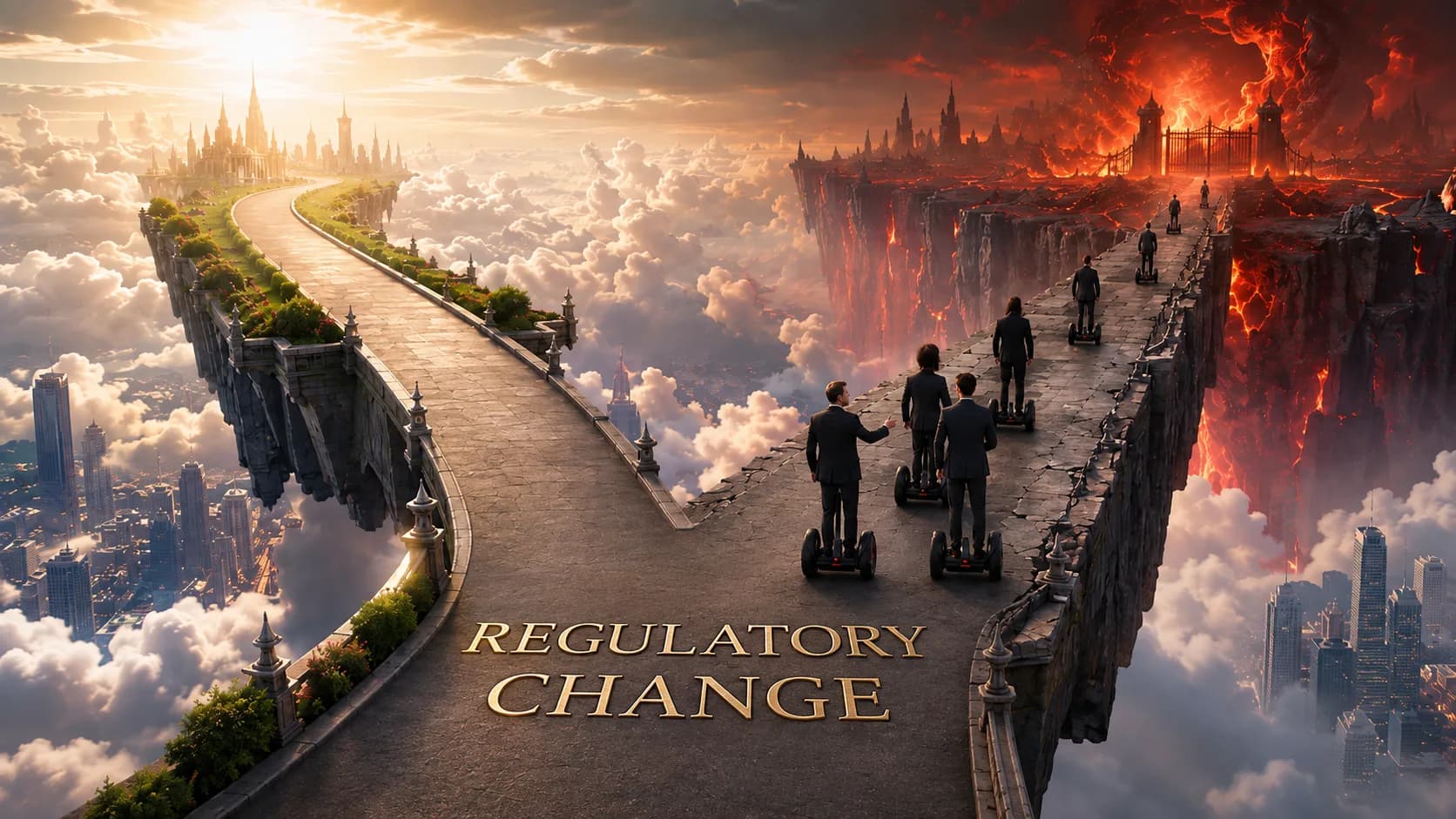
This distinction is becoming increasingly important as organizations operate in environments characterized by accelerating change. Regulations evolve continuously. Internal processes are updated frequently. New technologies alter workflows. Entire job categories are being reshaped by artificial intelligence. In many industries, the knowledge required to perform effectively today may differ substantially from the knowledge required only a year earlier.
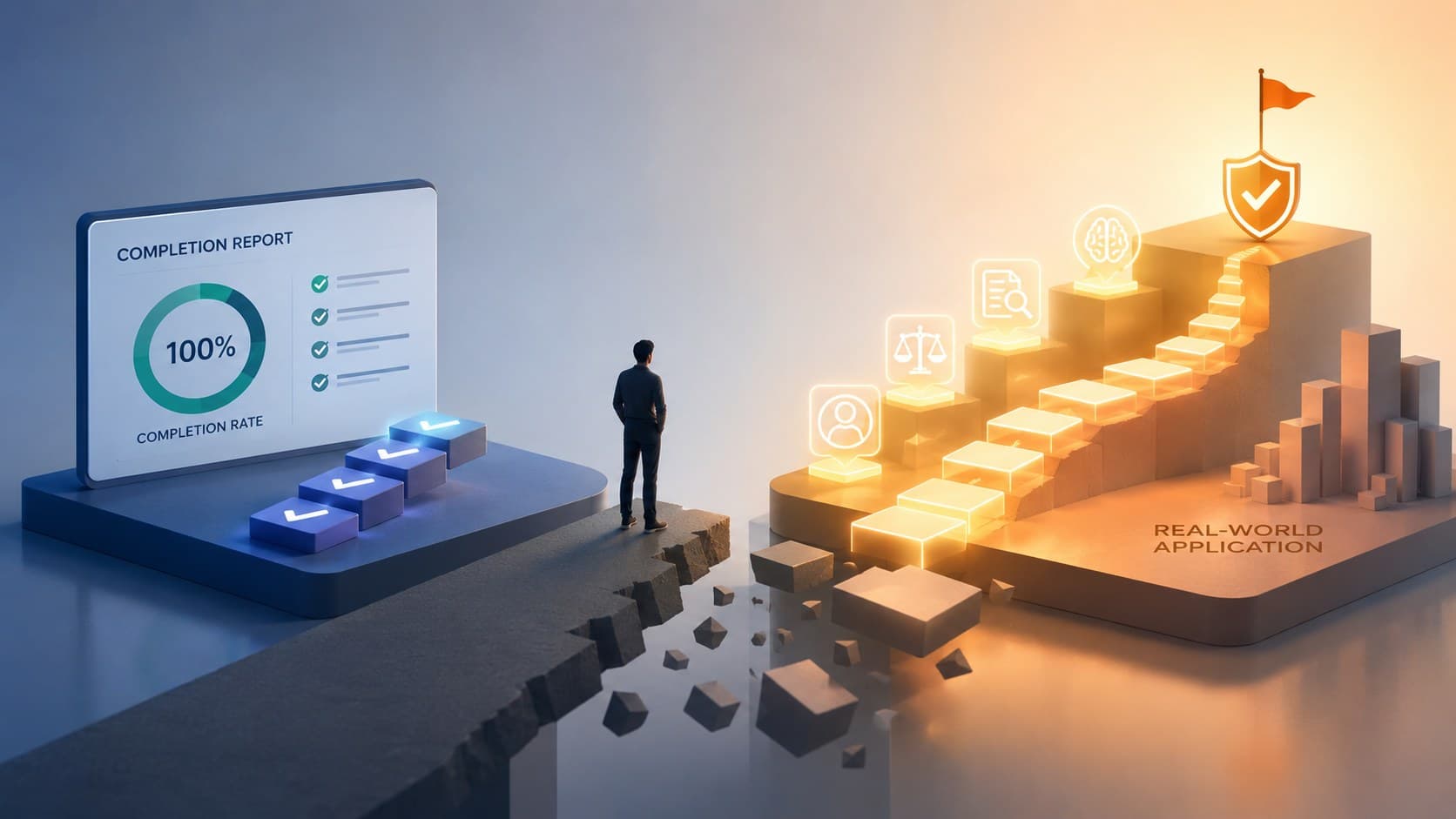
Under these conditions, traditional approaches to workforce training begin to reveal an important limitation. Completion records provide evidence that information was delivered. They do not necessarily provide evidence that knowledge was retained, understood, or applied correctly.
For decades, organizations largely accepted this tradeoff because there were few alternatives. Measuring understanding at scale was difficult, expensive, and time-consuming. The administrative challenge of delivering training often consumed so much attention that verifying knowledge became a secondary concern. As a result, workforce learning evolved around a relatively simple model: assign content, track completion, maintain records, and repeat the process as needed.
Increasingly, however, that model is colliding with new expectations.
Regulators want stronger evidence of workforce competence. Boards want greater confidence that critical risks are being managed. Insurers are asking more detailed questions about organizational preparedness. At the same time, leaders are recognizing that many operational failures stem not from malicious intent or technological shortcomings, but from knowledge gaps that were never identified until something went wrong.
This shift is creating demand for a different way of thinking about workforce development. Rather than focusing primarily on the delivery of training, organizations are beginning to focus on the verification of knowledge itself.
We believe this emerging category can be described as Knowledge Assurance.
Knowledge Assurance represents a transition from measuring educational activity to measuring organizational understanding. The objective is not simply to determine whether employees have been exposed to information. It is to establish whether critical knowledge exists within the workforce, whether that knowledge remains current, and whether organizations can demonstrate its presence with confidence when required.
This may sound like a subtle distinction, but it fundamentally changes how learning systems operate.
Traditional learning platforms were designed around content distribution. Their primary role was to assign courses, track progress, manage certifications, and generate reports. In effect, they functioned as systems for administering training. Knowledge Assurance systems serve a different purpose. They function as systems for validating capability.
What you are seeing is a lightweight example of an AI literacy knowledge graph. Nexera maps the field into subjects such as Foundations and Prompting & interaction, then into topics and individual knowledge bytes. Each colored dot reflects a mastery level, from new through fluent, so you can see where capability is strong and where gaps remain.
Knowledge graph
AI Literacy · 92 K-Bytes
New
4
Familiar
8
Comfortable
24
Confident
23
Fluent
33
Foundations
34 kb
82%
Types of AI
92%
Machine learning vs rule-based
Narrow vs general intelligence
How models work
84%
Neural networks
Tokens and embeddings
What AI can do
90%
Text generation
Multimodal analysis
What AI cannot do reliably
62%
Hallucination risk
Reasoning limits
Prompting & interaction
26 kb
74%
Clarity and context
82%
Role and task framing
Examples and few-shot
Iteration
78%
Refining outputs
Retrieval and files
72%
Grounding with documents
Agents and automation
60%
Multi-step agents
Verification & critical thinking
16 kb
58%
Accuracy checks
66%
Fact verification
Bias and framing
When to trust
52%
Low-stakes vs high-stakes
Human in the loop
Responsible use
16 kb
46%
What you can share
58%
Sensitive data classes
Regulated contexts
42%
GDPR basics
Organizational policy
18%
Approved tools
Incident response
Consider the difference between attending a lecture and passing an examination. Both are part of the learning process, but they answer different questions. Attendance confirms participation. Assessment provides evidence of understanding. Most enterprise learning systems have historically focused far more heavily on the former than the latter.
The challenge becomes particularly visible in highly regulated industries. A healthcare provider may be able to demonstrate that employees completed mandatory training. A financial institution may be able to show that compliance courses were assigned and completed on schedule. A manufacturer may maintain extensive records of safety training participation. Yet none of these records necessarily prove that employees can correctly apply that knowledge when confronted with real-world situations.
The gap between training delivery and demonstrated competence has always existed. What is changing is the cost of closing it.
Advances in artificial intelligence are making it increasingly practical to evaluate understanding continuously rather than periodically. Large language models, adaptive assessments, knowledge graphs, and agent-based systems make it possible to monitor comprehension, identify emerging knowledge gaps, and provide targeted interventions at a scale that would have been economically infeasible only a few years ago.
This technological shift is significant because it enables organizations to move away from episodic training cycles and toward continuous knowledge validation. Rather than waiting for annual certifications or periodic assessments, workforce capability can be monitored as a living system. Knowledge becomes observable. Areas of uncertainty become measurable. Remediation becomes proactive rather than reactive.
At Nexera, we view this transition as part of a broader evolution in workforce development. The future of learning will not be defined by how much content organizations can produce. Generative AI has already made content abundant. The more difficult challenge is ensuring that knowledge remains accurate, accessible, and demonstrably understood across an organization.
In this environment, the strategic question changes.
That question is likely to become one of the defining challenges of the next generation of workforce development.
And answering it requires more than training.
It requires assurance.